
Every commercial property owner with a flat or low-slope roof runs into the same recurring question. When the roof needs to be inspected, for an insurance claim, a maintenance plan, a warranty check, or a suspected leak, who goes up there and how do they do it? For decades the answer was a person with a ladder, a harness, and a clipboard. Drone inspections changed that. Both approaches still have a place, and the right one depends on the building, the goal, and the budget.
This guide compares the two on the things that actually drive the decision: safety, speed, cost, the quality of what you get back, and the situations where each one wins. Blue Nose Aerial Imaging of Tampa Bay runs commercial roof inspections across the Tampa Bay area, and we use both methods, so this is a practical comparison rather than a pitch for one over the other.
What a traditional roof inspection looks like
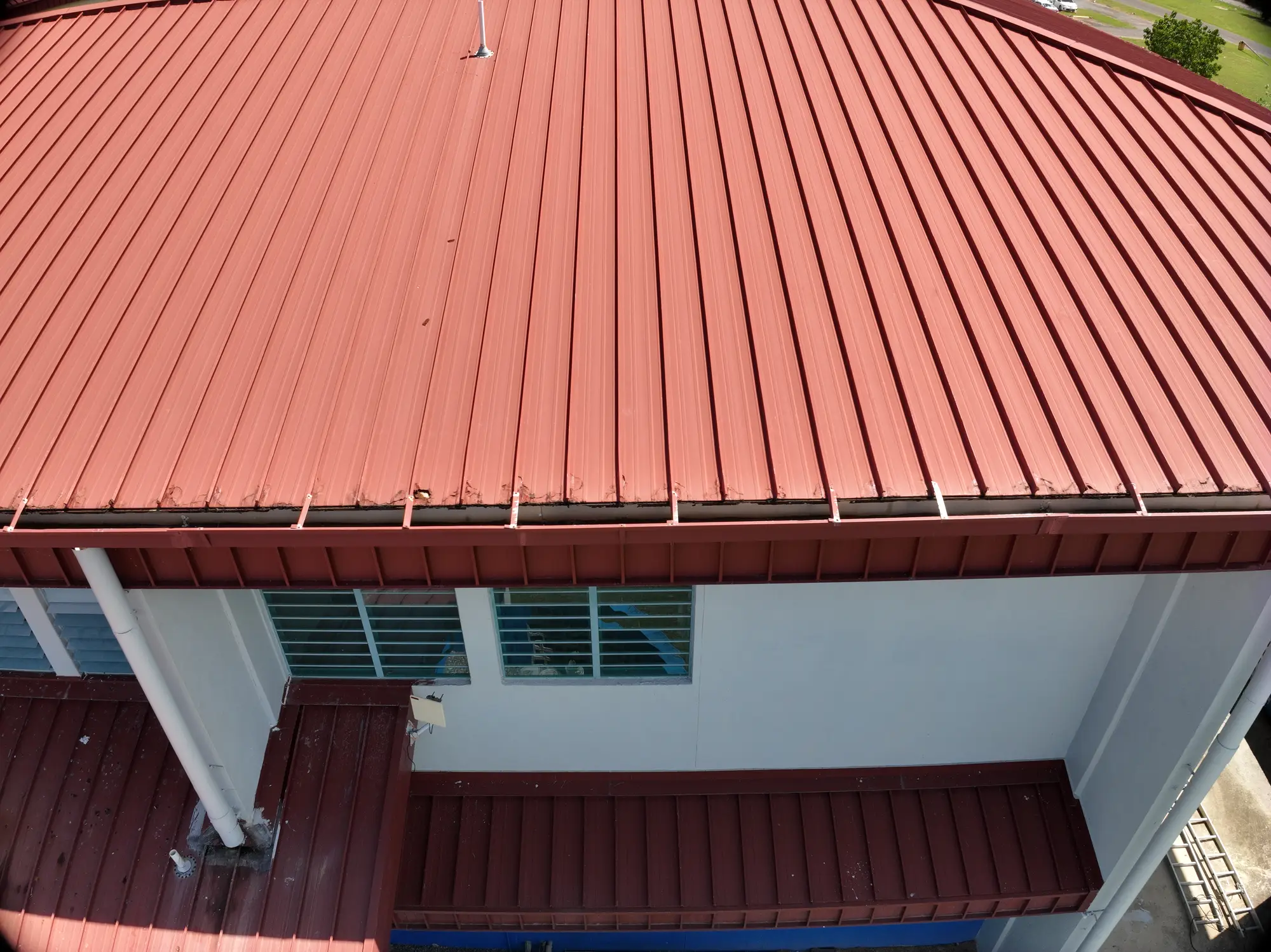
A traditional inspection puts a technician physically on the roof. They walk the surface, check seams and flashing by hand, photograph problem areas, and write up conditions in a report. On a small single-story building this is straightforward. On a large industrial roof, a multi-building campus, or a steep or fragile surface, it gets slower and riskier. Access often needs a lift or scaffolding, foot traffic can damage certain membranes, and a thorough walk of a big roof can take most of a day.
The strength of the hands-on method is touch. A technician can press on a soft spot, lift a loose seam, and feel where a membrane has pulled away from the deck. For close physical confirmation of a specific defect, nothing replaces a person on the roof.
What a drone roof inspection looks like
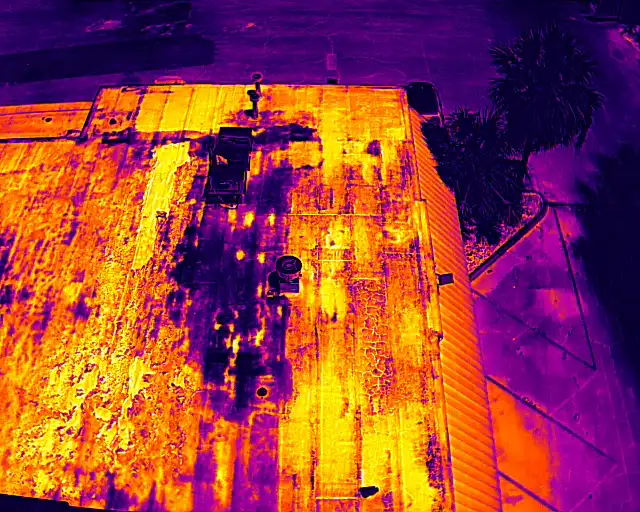
A drone inspection captures the same roof from the air, with no one leaving the ground. A single flight produces a high-resolution visual record of the entire surface, and a radiometric thermal pass reads the temperature differences that reveal trapped moisture and insulation problems below the surface. Every anomaly is GPS-tagged with a temperature reading and a written note, and the result arrives as an annotated report. Our guide to drone roof inspections walks through the full process if you want the detail.
The flight is fast. A drone covers a large roof in a fraction of the time a walking inspection takes, with no lift, no scaffolding, and no foot traffic on the membrane. The trade-off is that a drone documents conditions, it does not physically test them. It shows you exactly where the problems are and what they look like, which is usually enough to scope a repair or support a claim, and it tells the roofer precisely where to focus if a hands-on check is needed.
The dimensions that drive the decision
Safety
A roof is a fall hazard, and a large or steep commercial roof is one of the more dangerous places to put a worker. A drone inspection takes the person off the roof entirely. For tall buildings, fragile membranes, or roofs crowded with equipment and tight walkways, that alone is often the deciding factor. A traditional inspection can be done safely with the right fall protection, but the risk never drops to zero the way it does when the inspector stays on the ground.
Speed
A drone covers a roof quickly and delivers a complete record in a single pass. A walking inspection of the same roof takes longer, and a large campus can stretch across several days. When a property manager needs documentation on multiple buildings before a deadline, the aerial method usually wins on turnaround.
Cost
For most commercial roofs, the drone method costs less per building than mobilizing lifts, scaffolding, and a crew for a full-day walk, and the difference widens as the roof gets larger or harder to reach. Our drone roof inspection cost guide breaks down what drives the price. A hands-on inspection can still be the more economical choice on a small, easily accessed roof where no special access equipment is needed.
What you get back
This is where the two methods differ most. A traditional inspection gives you a technician’s notes and photos of the areas they chose to document. A drone inspection gives you a complete, georeferenced visual record of the whole roof plus a thermal layer that surfaces subsurface moisture you cannot catch from a photo or a walk. For an insurance claim or a maintenance budget, that documented, time-stamped record is easier to defend and easier to act on.
When a hands-on check still wins
A drone cannot touch the roof. When a defect needs physical confirmation, when a core sample is required, or when a roofer needs to feel the membrane to scope the exact repair, a person still has to go up. The most effective workflow often uses both: the drone finds and maps every problem area first, then a technician goes straight to those spots instead of walking the entire roof blind.
How we actually run it
At Blue Nose Aerial Imaging of Tampa Bay, we fly the drone side of that workflow. We perform drone inspections only, and our annotated thermal and visual report gives your roofing contractor exactly what a hands-on follow-up needs. That keeps the technician’s time on the roof short and focused, lowers the safety exposure, and gives the property owner a full record of the building instead of a sample of it. For a portfolio of buildings, this is usually the fastest and most cost-effective way to keep every roof documented. Our commercial roof inspection guide covers the full picture of what these inspections include.
The decision frame is simple. A drone inspection fits when the roof is large, tall, steep, fragile, or spread across multiple buildings, when you need fast turnaround, or when you need defensible documentation for a claim or a maintenance plan. A hands-on inspection fits when the roof is small and easily accessed, or when a specific defect needs physical testing. On most larger commercial properties the answer is both: fly first for the complete record, then have your roofer send a technician only where the data says to look.
We run this workflow on commercial properties across Pinellas, Hillsborough, Manatee, Sarasota, and the surrounding Tampa Bay counties. If you are weighing how to inspect a roof, or a portfolio of them, we can walk you through which approach fits the building and what the deliverable looks like.
Frequently Asked Questions
Is a drone roof inspection as thorough as walking the roof?
A drone inspection documents the entire roof surface in high resolution and adds a thermal layer that reveals subsurface moisture a walking inspection can miss. What it cannot do is physically test a defect by touch. For most documentation, claim, and planning needs the aerial record is more complete, and when a defect needs hands-on confirmation your roofer’s technician follows up on the exact spots the drone identified.
Are drone roof inspections accepted for insurance claims?
Yes. A drone inspection produces a time-stamped, GPS-tagged visual and thermal record with written notes on each anomaly, which is the kind of documentation that supports a claim. Many carriers and adjusters work from exactly this type of report.
Will a drone inspection damage my roof?
No. The drone never touches the surface. A traditional inspection requires foot traffic on the membrane, which can risk damage on certain roof types, and the aerial method avoids that entirely.
How long does a drone roof inspection take?
The flight over a typical commercial roof takes well under an hour, and a complete annotated report follows after processing. A walking inspection of the same roof, especially a large or multi-building one, usually takes considerably longer.
Do you offer both drone and traditional inspections?
No. Blue Nose Aerial Imaging of Tampa Bay performs drone inspections only. Our aerial report pinpoints every problem area, and your roofing contractor uses it to focus any hands-on work on those exact locations, which keeps the work fast, safe, and thorough.
Request a Commercial Roof Inspection
Rob Smith
Director of Operations, FAA Part 107 certified
Every roof inspection starts with a quick conversation. Rob Smith, our Director of Operations, will help you scope the right inspection and answer your questions on a call.
What to expect on the call:
- We learn about your roof and what you need to document.
- We recommend the right inspection scope and timeline.
- You get a clear, no-pressure quote.
You can also reach the team at 941-376-3396.