
What a commercial drone roof inspection costs across Tampa Bay, what drives the price, and how to think about the return.
What a commercial drone roof inspection costs depends on the roof, but the range is narrower than most people expect. For commercial properties across Tampa Bay, aerial data capture, including roof inspections, typically runs from $750 to $3,500 per site. This guide explains what moves a project within that range, what you get at each level, how it compares to a traditional inspection, and why the inspection usually pays for itself.
What a Commercial Drone Roof Inspection Costs
Commercial drone roof inspections in the Tampa Bay area generally fall between $750 and $3,500 per site. A straightforward visual inspection of a single building sits near the lower end. A large multi-building property with full thermal moisture coverage and detailed deliverables sits near the upper end. Most commercial roofs land somewhere in between, and the price is set during scoping once the roof and the deliverable are defined.
What Drives the Price
Five factors mostly determine where a project lands in that range.
Roof size and number of buildings
This is the biggest driver. A small single-building roof takes one short flight and limited processing. A large warehouse roof, a multi-building campus, or a portfolio of properties takes more flight time, more data, and more processing, which moves the price up.
Visual only versus thermal
A visual inspection captures and maps the roof surface. Adding a radiometric thermal scan to find trapped moisture adds sensor time, a specifically timed evening flight, and additional processing, so a thermal inspection costs more than a visual one. For many commercial roofs the thermal layer is the most valuable part, and the hidden moisture it catches early can be worth many times the added cost.
Deliverable complexity
A set of documented imagery and an orthomosaic is the baseline. Annotated findings, roof-area takeoffs for material planning, repeat-flight comparisons over time, and formatted reporting add work and therefore cost. The right deliverable depends on what the inspection has to support.
Travel beyond the no-mileage area
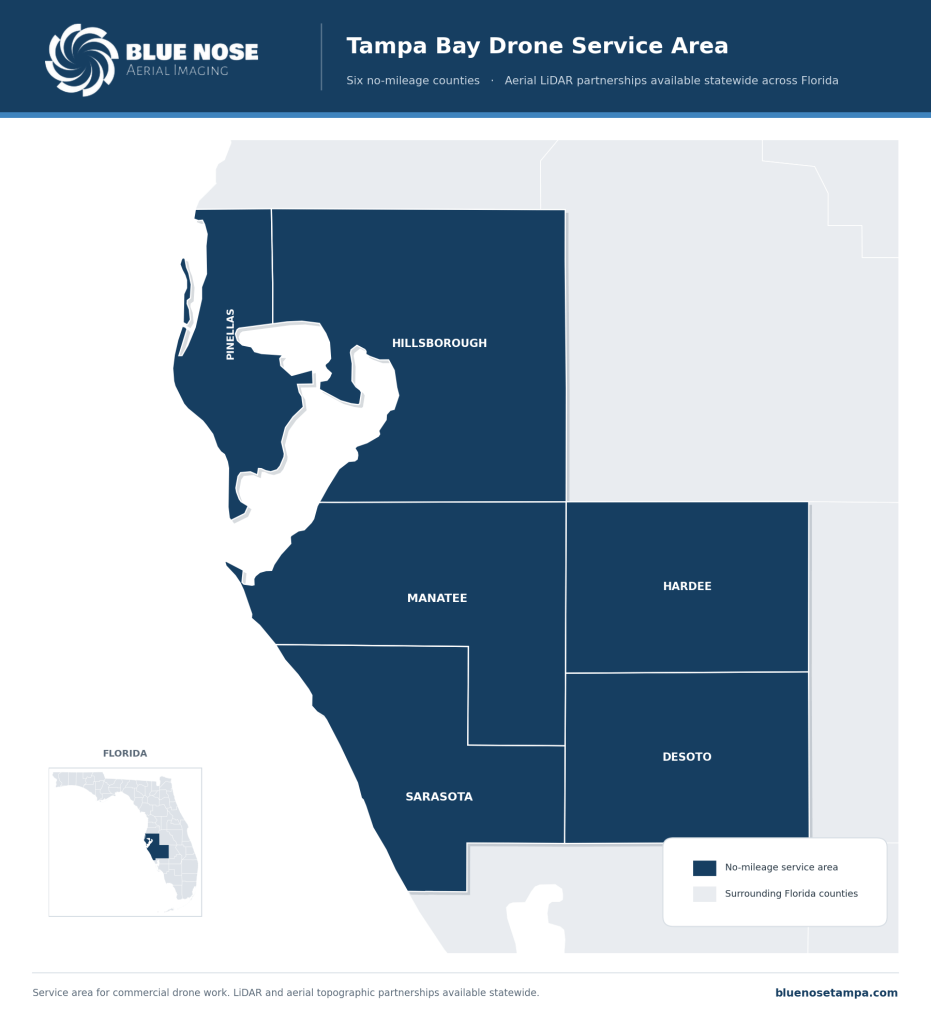
Within the six no-mileage counties, Blue Nose Aerial Imaging of Tampa Bay does not charge mileage. Projects outside that area, or large portfolios spread across the state, factor in travel.
Frequency and recurring programs
A one-time inspection is priced as a single project. A recurring program, such as twice-a-year inspections plus post-storm flights across a portfolio, is scoped as an ongoing arrangement, which is usually more efficient per inspection than one-off visits.
What You Get at Each Level
At the lower end of the range, a single-building visual inspection gives a facility manager a documented, dated map of the whole roof and detail imagery of the problem areas, without anyone on the roof.
In the middle of the range, a larger roof or an inspection that adds thermal moisture detection gives a more complete picture, including where the roof is wet under the membrane, which is what turns an inspection into a repair plan.
At the upper end, a large multi-building property or a full portfolio with thermal coverage and detailed, comparable deliverables gives an asset manager a documented condition record across many roofs at once, suitable for capital planning and claims across the whole property base.
How It Compares to a Traditional Inspection
A traditional roof inspection has its own costs that are easy to overlook: the labor and time to walk and photograph the roof, the safety exposure of putting people at height, the equipment to reach a tall or difficult roof, and the disruption to building operations. On a large or hard-to-access roof, those costs add up, and the coverage is still only as complete as where the inspector walked.
A drone inspection is often comparable or lower in direct cost on a large roof, faster, and more complete, and it removes the fall-hazard exposure entirely. The clearest savings, though, are not in the inspection itself. They come from catching a small problem early.
Why the Inspection Pays for Itself
The economics of roof inspection are driven by what a missed problem costs. A separated seam or a small area of wet insulation, caught early, is a modest repair. The same problem left undetected spreads, saturates more insulation, reaches the deck, and eventually shows up as an interior leak, at which point the repair, the interior damage, and the disruption together can run many times the cost of the inspection that would have caught it.
A documented inspection history also strengthens warranty and insurance positions, which protects against another category of large, avoidable cost. Set against those numbers, a $750 to $3,500 inspection is inexpensive insurance.
Where Blue Nose Aerial Imaging of Tampa Bay Inspects
Blue Nose Aerial Imaging of Tampa Bay provides commercial roof inspections with no mileage charges across six counties.
Projects beyond that area are quoted with travel factored in.
How to Get an Exact Price
Because the price depends on the roof and the deliverable, Blue Nose Aerial Imaging of Tampa Bay gives an exact figure after a short scoping conversation rather than a blind quote. You describe the property, the roof type and size, and whether you need a visual inspection or thermal moisture detection, along with what the inspection has to support, and Blue Nose Aerial Imaging of Tampa Bay returns a written scope and a fixed price for the work.
Frequently Asked Questions About Drone Roof Inspection Cost
How much does a drone roof inspection cost?
Commercial drone roof inspections typically run from $750 to $3,500 per site in the Tampa Bay area. Where a specific roof lands depends on its size, whether thermal moisture detection is included, and the deliverables, so the exact figure comes out of a short scoping call.
Why does thermal imaging cost more?
Thermal adds a radiometric sensor, an evening flight timed so moisture signatures show, and extra processing to build the temperature map, all of which sits on top of a visual-only inspection. For many roofs that layer is worth the difference, since the wet insulation it finds early can cost far more to leave undetected.
Is a drone roof inspection cheaper than a traditional inspection?
On a large or hard-to-access roof, the direct cost is often comparable or lower, and the drone is faster, more complete, and free of the fall risk of putting someone on the membrane. The bigger savings tend to come later, from catching a small problem before it spreads into an interior leak and a major repair.
Do you charge for travel?
No, not within the six no-mileage counties. Anything outside that area is quoted with travel included.
Can I set up a recurring inspection program?
Yes. Twice-a-year inspections plus post-storm flights, across a single building or a whole portfolio, are set up as an ongoing program, which usually prices better per visit than one-off calls.
What areas does Blue Nose Aerial Imaging of Tampa Bay serve?
Blue Nose Aerial Imaging of Tampa Bay covers six no-mileage counties: Pinellas, Hillsborough, Manatee, Sarasota, Hardee, and DeSoto. Larger portfolios and one-off projects beyond those counties are taken on with travel factored into the quote.
Request a Roof Inspection Quote
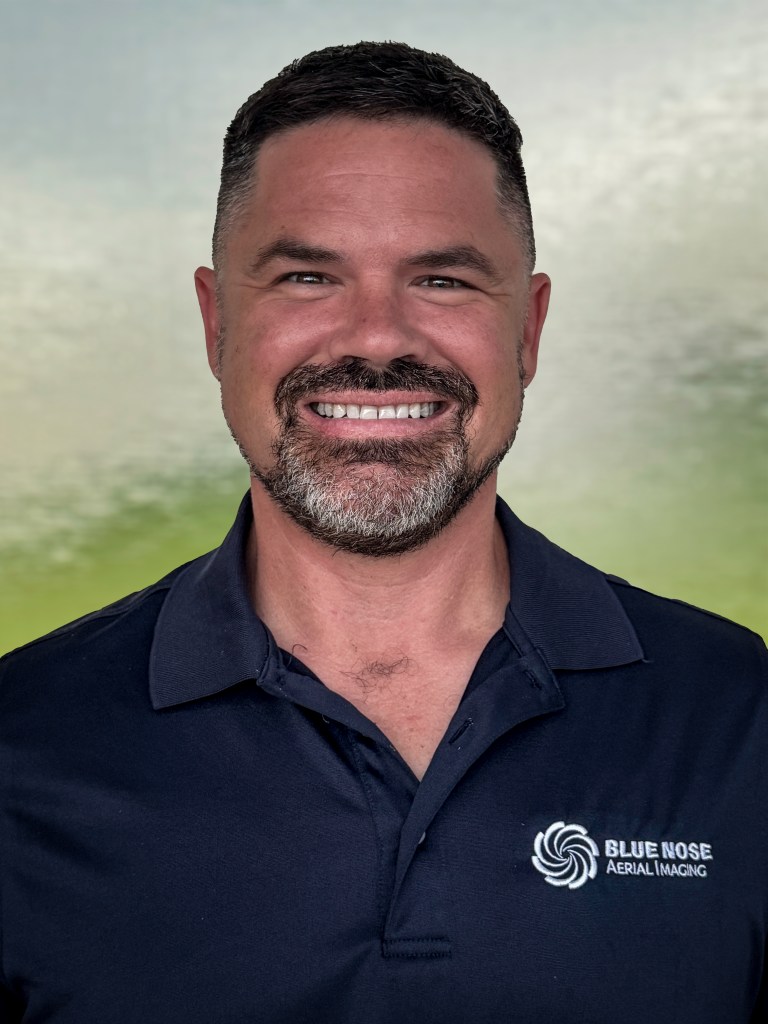
Rob Smith
Director of Operations, FAA Part 107 certified
A commercial roof inspection is priced after a short scoping conversation, not a blind quote. Rob Smith, our Director of Operations, will scope your roof and return a written scope and a fixed price for the work.
What to expect on the call:
- We learn about your property, the roof type and size, and whether you need a visual inspection or thermal moisture detection.
- We recommend the right inspection scope for what it has to support.
- You get a written scope and a fixed price, with no mileage charges inside the six-county area.
You can also reach the team at 941-376-3396.